
15 Minutes to Better Posture: A Gentle Routine for Desk Workers
FITNESS
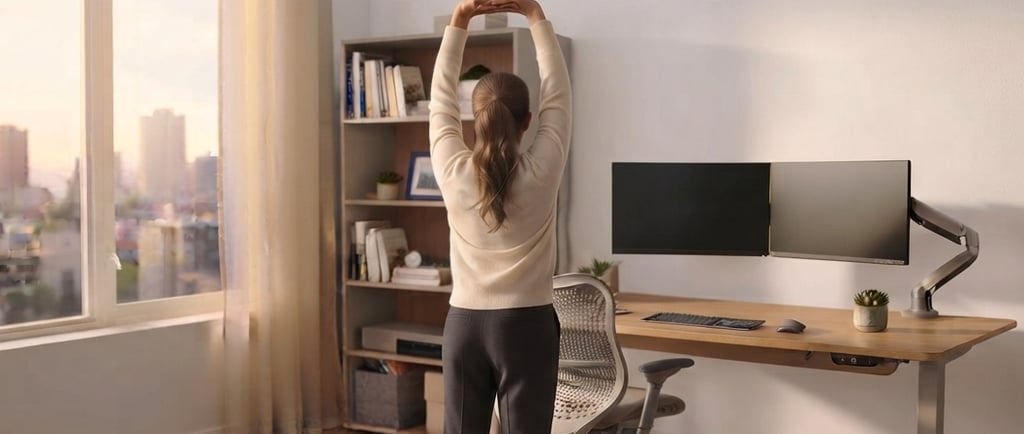
We have all felt it: that creeping dull ache between your shoulder blades, the tight lower back, and the heavy shoulders that seem to arrive right around 3:00 PM. If you spend your days anchored to a keyboard, your body bears the quiet brunt of prolonged sitting. Your hip flexors shorten, your chest caves inward, and your spine locks into a forward curve.
Wellness does not require an extreme overhaul. You do not need a grueling hour-long gym session to counteract the effects of a desk job. You just need an intentional, science-backed micro-reset that fits seamlessly into your workday.
Here is a gentle, 15-minute routine designed to release tension, open up your posture, and help you finish your workday feeling grounded rather than drained.
Phase 1: Posture Awakening (3 minutes)
Before you stretch or strengthen, you have to undo the unconscious slouch. Start right where you are, either standing or sitting tall at the edge of your seat.
The Movement: The Wall Angel Reset
How to do it: Stand with your back flat against a wall, feet a few inches out. Bring your arms up into a goalpost position with elbows bent at 90 degrees. Slowly slide your arms up and down the wall like you are making a snow angel.
Why it works: This subtle movement wakes up your postural stabilizers, especially your lower traps and upper back, encouraging your thoracic spine to gently extend without force.
Phase 2: Open the Chest and Upper Back (5 minutes)
Hours of reaching for a mouse or typing pull your shoulders forward, compressing your chest and cutting down on deep, diaphragmatic breathing.
The Movement: Seated Thoracic Rotation and Chest Opener
How to do it (Rotation): Sit upright with feet flat. Place one hand behind your head and the other across your opposite ribcage. Exhale as you slowly rotate your upper body toward the open elbow. Repeat five times per side.
How to do it (Chest Opener): Stand up, clasp your hands gently behind your lower back, straighten your arms, and lift your chest slightly upward. Hold for 20 seconds while breathing deeply into your collarbones.
Why it works: It counters the chronic forward roll of desk life, freeing up your mid-back joints and allowing your lungs to fully expand.
Phase 3: Wake Up the Hips and Lower Back (4 minutes)
When you sit for long stretches, your glutes and hips effectively fall asleep, forcing your lower back to overcompensate.
The Movement: Chair Squats and Gentle Hip Hinges
How to do it: Stand up from your desk chair, lower yourself back down with control until you lightly tap the seat, and press firmly through your heels to return to standing. Repeat for 10 to 12 slow, controlled repetitions.
Why it works: This simple movement reactivates dormant glutes, boosts lower-body circulation, and reminds your nervous system what active alignment feels like.
Phase 4: Release Neck and Wrists (3 minutes)
We finish where the tension usually pools: the neck, shoulders, and wrists from repetitive typing.
The Movement: Upper Trap Release and Wrist Flexor Stretch
How to do it (Neck): Gently drop your right ear toward your right shoulder until you feel a light stretch along the left side of your neck. Hold for 15 seconds and switch sides.
How to do it (Wrists): Extend one arm out with your palm facing up, and use your opposite hand to gently pull your fingers back toward you. Hold for 15 seconds per hand.
Why it works: It relieves acute micro-tension, preventing repetitive strain and giving your nervous system a calm cue to transition out of work mode.
Build a Sustainable Rhythm
Good posture is not about holding a rigid, perfect position for eight hours straight because it is really about movement variety. Treat this 15-minute sequence as a midday anchor, or break it into smaller micro-breaks between meetings.
To support your body from the inside out during long focus sessions, consider incorporating supportive ergonomics such as ergonomic office chairs with dynamic lumbar support, adjustable standing desk converters, ergonomic footrests, vertical ergonomic mice, and supportive wrist-rest mouse pads.
Small, intentional shifts add up over time. Move a little, breathe a little deeper, and give your body the sanctuary it deserves.


